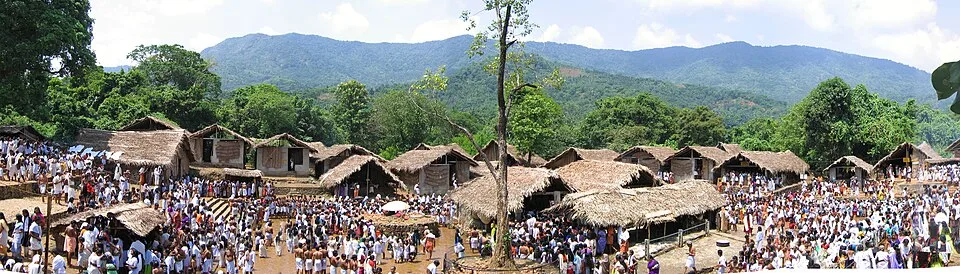
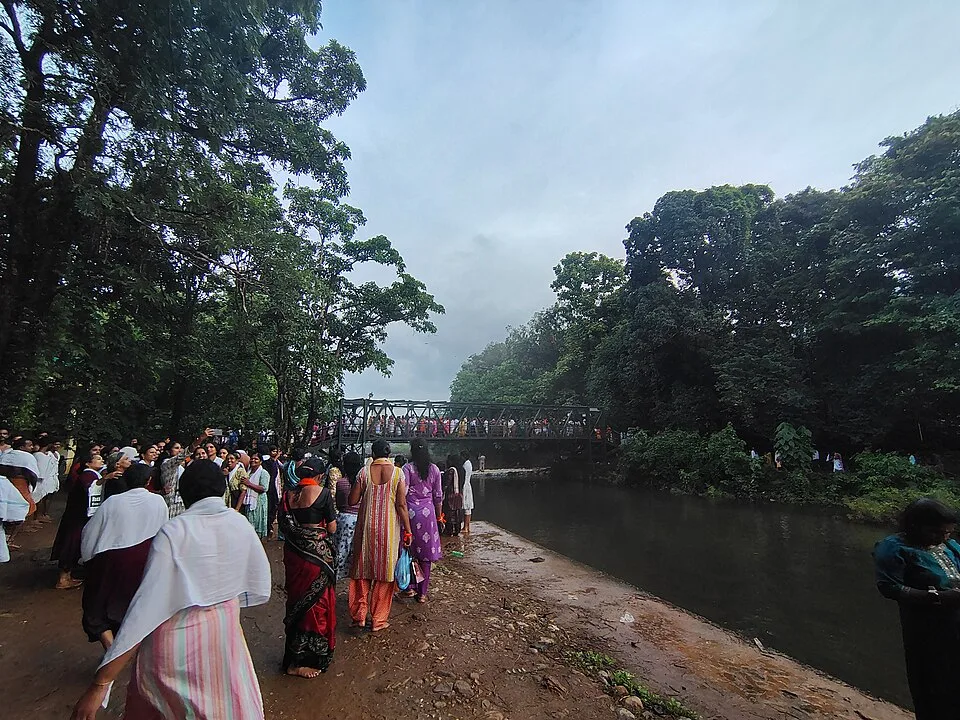
ബാവലിപ്പുഴയുടെ ഇരുകരകളിലെ അക്കരെ കൊട്ടിയൂരും ഇക്കരെ കൊട്ടിയൂരും ബന്ധിപ്പിക്കുന്ന തീർത്ഥാടനമാണ് വൈശാഖ മഹോത്സവം.
Source review 2026-11-27
Rituals in the source account
Pilgrims bring offerings to the shrine. The published descriptions identify an opening ghee ritual and a concluding Thirukalasattu, while the complete sequence remains under the Devaswom’s custodianship.
Seasonal context · not a confirmed annual date
Traditionally associated with the Vaishakha period around May–June. This is seasonal context, not a new-edition programme.
Documented history
Government tourism documentation identifies two linked shrines on opposite sides of the Bavali. The Akkare ritual site differs from a permanently enclosed temple: worship centres on a stone platform, with temporary festival arrangements. The sources document a living pilgrimage; they do not establish an archaeological founding date.
What makes it distinct
The river, forest setting and temporary ritual space are integral to the observance. Neyyattam marks the opening sequence; tender-coconut offerings and Elaneerattam are separately described in the official account.
Community context
The Kottiyoor Devaswom, ritual custodians and participating pilgrims.
Beliefs, folklore & attributed traditions
The association with Daksha Yaga and the belief in a self-manifested Shiva lingam belong to Hindu sacred tradition; neither is presented here as an independently dated historical event.
Venue
Akkare and Ikkare Kottiyoor, beside the Bavali River, കണ്ണൂർ.
Annual editions
The permanent history is separate from each year’s programme. Dates are shown only with a dated source; an old seasonal pattern is not a confirmed future date.
വാർഷിക തീയതികൾ ലഭ്യമല്ല.
Ritual documentation
Neyyattam നെയ്യാട്ടം
venue
Kottiyoor shrines, Kannur; the detailed account identifies Ikkare Kottiyoor for the sword’s arrival.
explanation
The official Kottiyoor account describes the ceremonial use of ghee in the festival’s opening observance. Its more detailed shrine description associates the rite with a sword brought from Muthirikavu in Tavinal to Ikkare Kottiyoor, over which ghee is poured.
significance
The act belongs to the opening of the Vaishakha pilgrimage and links the receiving shrine with another named ritual location. The material offering and the movement of the sword are documented elements; their complete theological interpretation is not independently established here.
research gaps
Temple custodians should confirm the spelling of the originating shrine, custodial roles and the exact current procedure before a detailed ritual sequence is published.
beliefs folklore
The wider Daksha Yaga association belongs to the sacred narrative of Kottiyoor. It is not used to date the establishment of Neyyattam.
sequence context
Described as an opening or first-day observance. No full temple sequence or separately numbered position is supplied.
current programme
This describes a documented practice, not a confirmed schedule or invitation for a future edition.
documented history
Kerala Tourism records Neyyattam as an existing Kottiyoor practice. The account does not provide the original date of the rite or demonstrate that its procedure has remained unchanged across centuries.
sequence number note
Zero means no ordinal position in a complete ritual sequence has been established. Day numbers or opening/closing descriptions are retained separately as context.
Kottiyoor Vaishaka Mahotsavam ↗Kerala Tourism, Government of Kerala · Two shrines, river setting, stone platform, opening and closing rituals · Accessed 2026-11-27
Kottiyoor Shiva Temple ↗Kerala Tourism, Government of Kerala · Neyyattam, tender-coconut offering and attributed Daksha Yaga tradition · Accessed 2026-11-27
Elaneerattam ഇളനീരാട്ടം
venue
Kottiyoor Shiva shrine complex beside the Bavali River, കണ്ണൂർ.
explanation
Devotees bring tender coconuts as offerings, and tender-coconut water is ceremonially poured over the deity. Kerala Tourism identifies this distinct Kottiyoor observance as Elaneerattam.
significance
The ritual makes a locally familiar plant offering part of the pilgrimage’s worship. Bringing the offering and performing the ceremonial pouring are related actions, but the source does not identify every group’s entitlement or custodial responsibility.
research gaps
The current Devaswom programme and community custodians are needed to verify the collection, arrival and ceremonial roles for a particular edition.
beliefs folklore
The offering expresses devotion to Shiva. No material, medical or other guaranteed benefit is asserted.
sequence context
Part of the Vaishakha festival cycle. The cited description supplies no exact festival day or ordinal position.
current programme
This describes a documented practice, not a confirmed schedule or invitation for a future edition.
documented history
The official Malabar pilgrimage account explicitly documents both the tender-coconut offering and the pouring ritual. No reliable founding date or uninterrupted ancient chronology is supplied.
sequence number note
Zero means no ordinal position in a complete ritual sequence has been established. Day numbers or opening/closing descriptions are retained separately as context.
Kottiyoor Shiva Temple ↗Kerala Tourism, Government of Kerala · Neyyattam, tender-coconut offering and attributed Daksha Yaga tradition · Accessed 2026-11-27
Photographic record
licensed photography · Kottiyoor festival · 2005 Vinay · Public domain https://commons.wikimedia.org/wiki/File:Kottiyoor_temple_festival.jpg · Resized to WebP; displayed with a responsive crop. Source licence retained. · Licence ↗ · Capture date not suppliedlicensed photography · Kottiyoor festival · 14 June 2026 Manukrishnan80 · CC BY-SA 3.0 https://creativecommons.org/licenses/by-sa/3.0 · Resized to WebP; displayed with a responsive crop. Source licence retained. · Licence ↗ · Capture date not supplied
Source notes
Kottiyoor Vaishaka Mahotsavam ↗Kerala Tourism, Government of Kerala · Two shrines, river setting, stone platform, opening and closing rituals · Accessed 2026-11-27
Kottiyoor Shiva Temple ↗Kerala Tourism, Government of Kerala · Neyyattam, tender-coconut offering and attributed Daksha Yaga tradition · Accessed 2026-11-27