An Entire World Called Kerala.
KERALA WORLDകേരളമെന്നൊരു ലോകം.
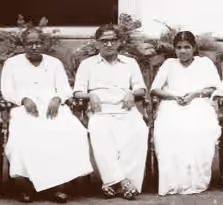
E. M. S. Namboodiripad, C. Achutha Menon and K. R. Gowri Amma in the 1957 archival photograph
1957 · Kerala Legislature · CC BY-SA 2.5

1956 — THE STORY CONTINUES

Kerala Through the Years

Seven decades of governance, progress & transformation.

ഭരണങ്ങൾ മാറുന്നു. കേരളം വളരുന്നു.

Discover the governments, people and public institutions behind Kerala’s changing story.

Secretariat · 2011 / Vizhinjam · 2024 / Kochi Metro · 2017. Photo credits ↗

A STATE. MANY CHAPTERS.

Kerala’s Journey Since 1956

Kerala was formed on 1 November 1956. Its first elected ministry took office on 5 April 1957.
Complete historical timeline →

All 24 ministries, including short terms and repeat terms.

President’s Rule and transitional administration

These periods are not elected ministries. Ministry tenure dates and constitutional transitions are retained as separately documented; gaps are not silently filled.

Two sources. Clear context.

The 408-page Kerala Development Report 2026 and the 24-page Fifth Progress Report 2025–2026 support this combined overview. Their coverage differs; cumulative figures are not split between ministries without dated evidence.

Original reports & supporting information ↗

10 Years at a Glance · 2016–2026

What the reports describe, in six places to begin.

Infrastructure
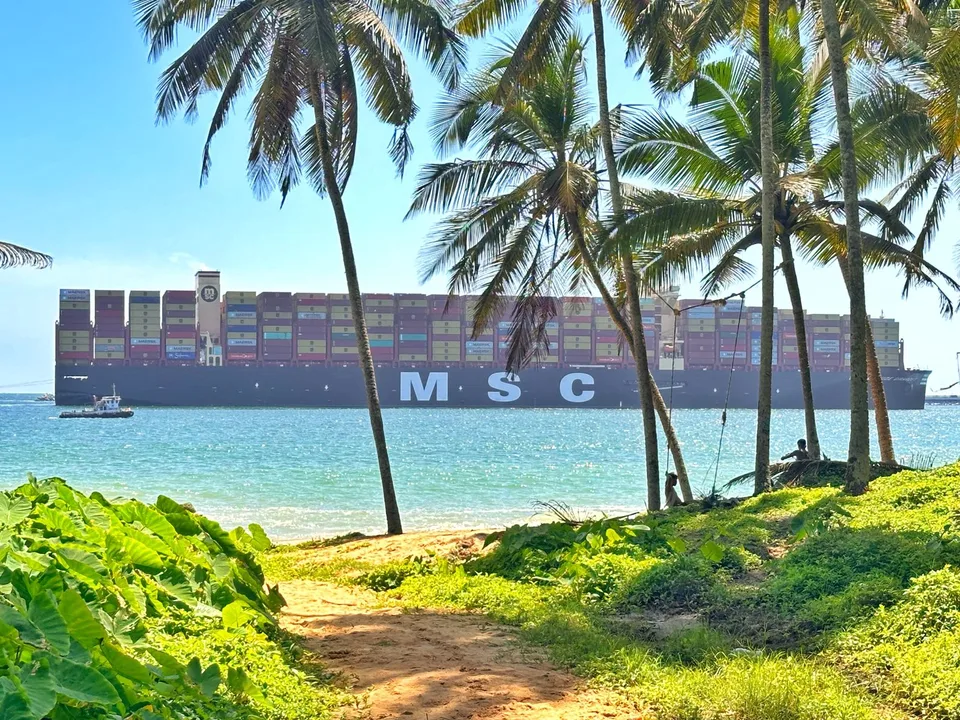
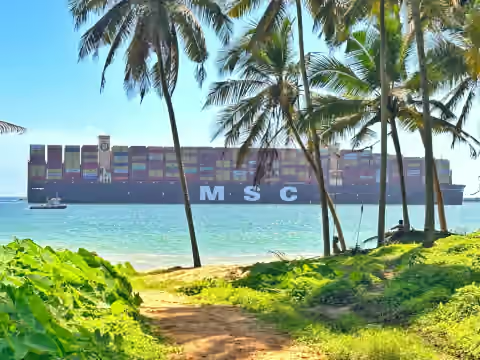
An MSC container ship and a small tug seen through coconut palms near Vizhinjam.
An MSC container ship arriving at Vizhinjam, 5 October 2024.

The report covers roads, buses, rail-linked urban mobility, ports and inland waterways as a connected transport system. State land-acquisition support, Union responsibilities and multiple delivery agencies are relevant to attribution. Many programmes remain partly completed.

Government-reported · 13th and 14th Plan contextKnow more →

Healthcare

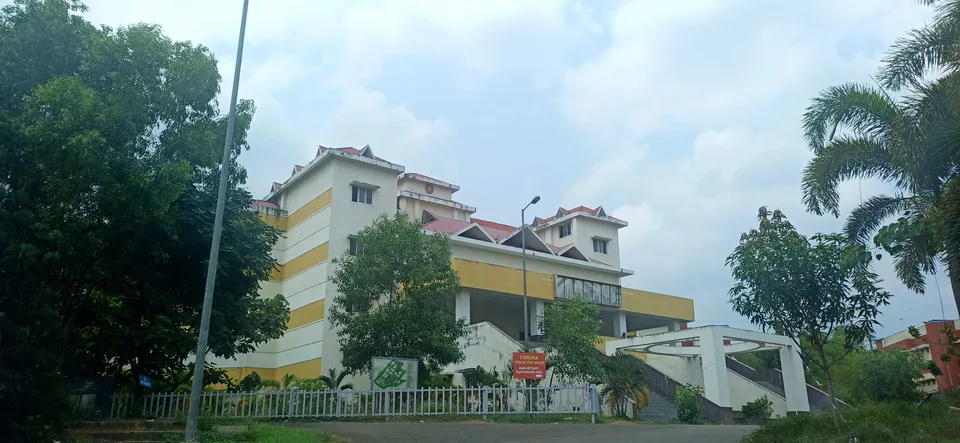
A yellow-and-white building among trees at Government Medical College, Kollam.
A building at Government Medical College, Kollam, May 2021.

The report identifies completed transformation of 740 Family Health Centres, 105 Block PHCs and 46 hospitals, while separately listing further works nearing completion.

Government-reported · Programme stock reported in 2026; exact observation date not statedKnow more →

Education

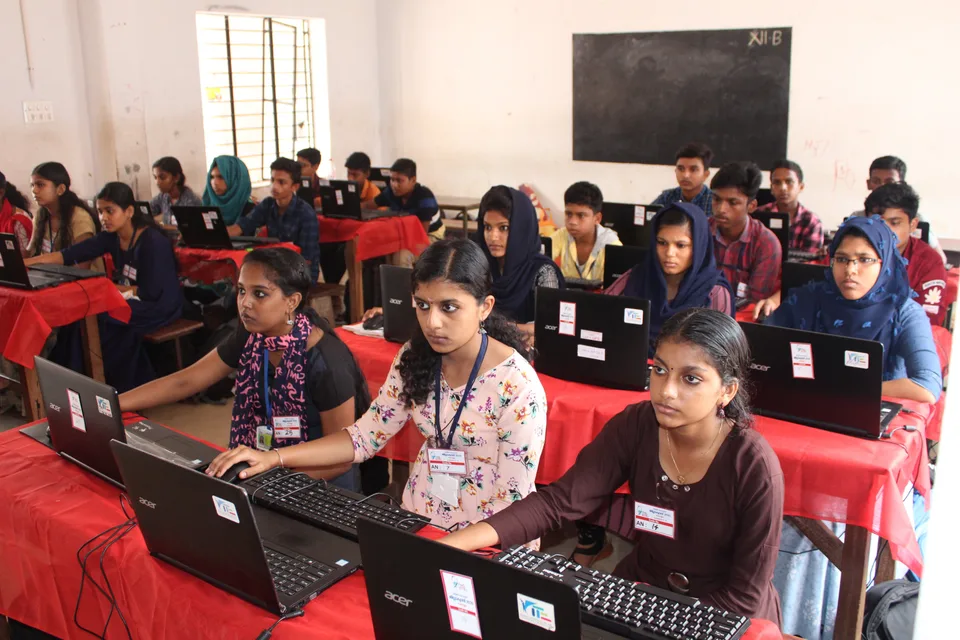
Students seated at rows of laptops and keyboards during the Little Kites ICT camp in Kollam.
Students at the Little Kites Kollam district ICT camp, February 2020.

The report records 973 sanctioned school buildings and 598 completed buildings under the KIIFB-supported programme; sanctioned works are kept separate from completed works.

Government-reported · Cumulative nine-year account in the report; exact stock date not statedKnow more →

Housing

The report says LIFE completed and handed over five lakh houses, helping families obtain a secure home. This cumulative total brings together housing delivered over the programme’s operation.

Government-reported · 2026 report snapshotKnow more →

Welfare

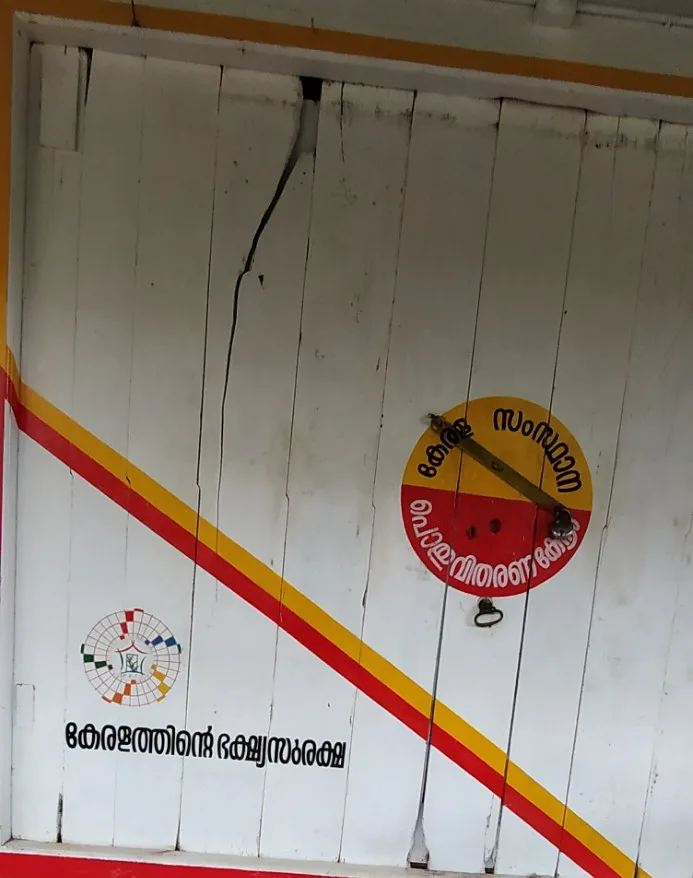
A Kerala public-distribution-system logo painted on closed, padlocked wooden doors.
Kerala ration-shop identification on closed wooden doors, October2019.

The report records 13,69,148 metric tonnes distributed through PDS in 2024–25, with separate quantities for AAY, priority and non-priority cards.

Government-reported · 2024–25Know more →

Digital Kerala

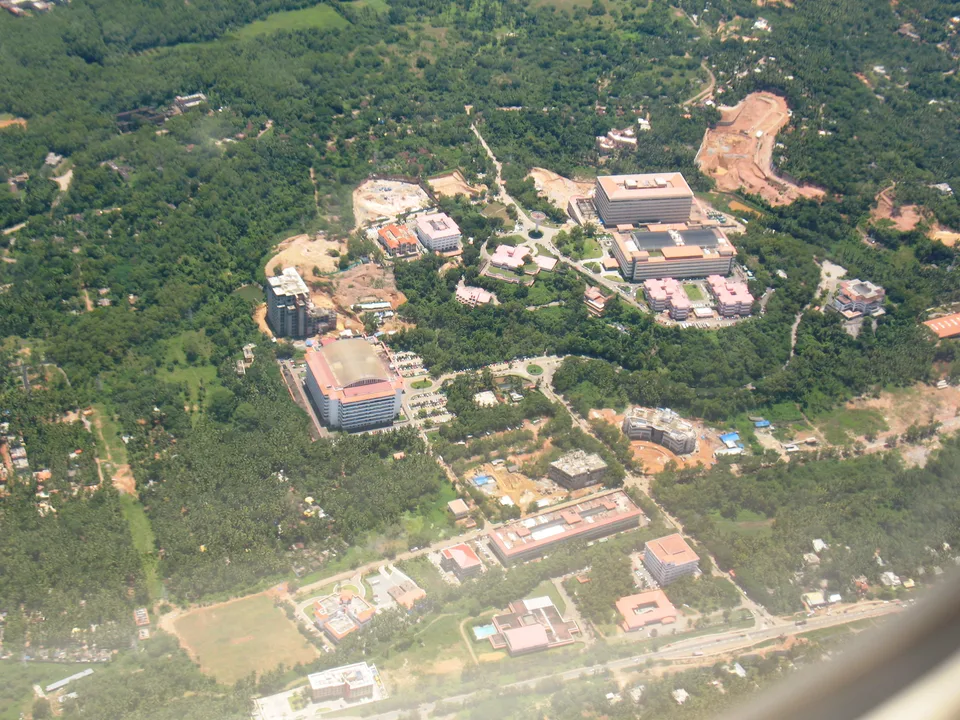
An aerial view of Technopark buildings among trees in Thiruvananthapuram.
Technopark Phase I in Thiruvananthapuram, photographed from above on 13 October 2007. This historical view illustrates Kerala’s technology landscape; it does not show a KFON installation or a named startup programme.

IT policy combines industrial employment with accessible digital public services. The report discusses park expansion, startup support and KFON, while treating emerging AI and other technologies as opportunities requiring skills, infrastructure and institutional support.

Government-reported · 2016 to 2025Know more →
Read all published development stories →

Development, in Brief

Explore every published summary, with the full account one click away.

Explore all 310 development stories

Monthly financial support

The 2025–26 progress report records ₹1,000 a month paid to 16,40,276 eligible women.

Vizhinjam: the next phases

The report advances the target for subsequent phases from 2045 to 2028. This is an expansion target, not completed work.

Homes after the Wayanad disaster

The first township phase for Mundakkai–Chooralmala families was completed, with 178 homes reported handed over.

Wayanad tunnel: a construction milestone

Approvals were obtained and construction inaugurated for the Anakkampoyil–Kalladi–Meppadi route, according to the report.

A digital shift in classrooms

About 45,000 classrooms in 4,752 secondary schools received digital equipment.

LIFE: five lakh homes

By February 2026, the report records a cumulative milestone of five lakh completed homes under LIFE.

IT exports grow

Estimated IT export earnings rose from about ₹9,000 crore in 2016 to ₹26,770 crore in 2025.

Land rights for families

The progress report records 4,56,689 land titles issued across Kerala over the preceding ten years.

Support in old age

Old-age pension coverage stood at 28.8 lakh beneficiaries in the report’s October 2025 figures.

Safer housing for coastal families

Under Punargeham, 2,782 fishing families received houses and 738 families received flats, the report says.

More services at K-Stores

The report records 2,142 functioning K-Stores, combining ration shops with additional everyday services.

Pallivasal’s second phase

A 60 MW second phase of the Pallivasal expansion was inaugurated, according to the progress report.

School building programme

The report’s nine-year account records 598 school buildings completed out of 973 sanctioned under the KIIFB-supported programme. Approval and completion are different stages.

Revised multilingual textbooks

The report records 410 textbook titles in Malayalam, English, Tamil and Kannada as revised books were introduced in 2024–25 and 2025–26.

Class 12 pass rates declined

Class 12 pass rates fell from 87.9% in 2020–21 to 75.3% in 2024–25 in the report’s comparison. These figures alone do not establish the cause.

Barriers facing transgender learners

Social discrimination, financial hardship and limited family support remain barriers to continuing education for transgender learners.

The goal: learning opportunities through Class 12

The report proposes extending equitable access through Class 12 and strengthen teacher preparation, inclusive support and learning quality alongside infrastructure.

Digital learning and preparedness for disruption

The report proposes using digital resources and formative mentoring while improving resilience to disasters and disruption.

Four-year undergraduate programme

The report records introduction of FYUGP in 2024–25, with flexible subject choices and research, internship and skills components.

Shared academic library network

KALNET, launched in February 2021, brought together 15 lakh titles across 147 libraries belonging to 11 universities, according to the report.

College mental-health counselling

Jeevani’s 145 counsellors addressed 4,827 cases, according to the report. Cases count service contacts, not unique people or completed treatments.

Graduate migration and unequal access

The chapter identifies graduate outmigration and the need for more support to remote institutions and underrepresented groups.

More learners needed in advanced skills programmes

Enrolment in advanced skill programmes needs to rise substantially to meet the declared skilling ambition.

The next step: stronger, more inclusive institutions

The report proposes increasing support for infrastructure, faculty development, research and student services with explicit attention to equity.

Connecting universities with industry and research

The report proposes strengthening university–industry collaboration, internships, digital readiness and interdisciplinary research.

Aardram facility transformation

The report identifies completed transformation of 740 Family Health Centres, 105 Block PHCs and 46 hospitals, while separately listing further works nearing completion.

Infant mortality comparison

The report compares infant mortality of 10 per 1,000 in the September 2017 SRS release with 5 per 1,000 in the September 2025 release. This does not establish that one programme alone caused the change.

KASP cashless treatment claims

The report records about 57 lakh claims and nearly Rs 4,700 crore disbursed under KASP. Claims are not unique patients, and the total includes State and Union funding.

Population screening through Shaili

Screening reached over 1.5 crore people in its first phase and 1.3 crore in the second by 28 March 2025. The same people may appear in both phases, so the counts cannot be added as unique individuals.

The growing burden of chronic disease

The report identifies high levels of modifiable risk factors and a growing burden of non-communicable diseases.

Staffing constraints in public healthcare

Sanctioned staffing constraints require reliance on several contractual, local-government and training-based workforce channels.

Prevention and continued care: the way ahead

The report proposes strengthening prevention, continuity of care, population-based screening and referral follow-up.

The goal: protection from treatment costs

The report proposes moving toward universal financial protection and integrated human, environmental and animal-health approaches.

Gender-responsive Plan allocation

The 2025–26 Gender Budget is reported as 20.79 per cent of total Plan outlay. This is a budget allocation share and not an expenditure or outcome measure.

Women-friendly tourism registrations

The chapter reports over 10,700 women registered in a women-friendly tourism initiative covering roles such as guiding, driving and entrepreneurship. Registrations do not establish employment placements.

Women-led start-ups

The report records 99 women-led startups since 2019. A separate ₹2.5 crore allocation for 500 women innovators in 2024–25 is a funded target, not confirmed assistance to 500 recipients.

Women still face wage and employment gaps

Educated unemployment, the gender wage gap and limited long-term secure work remain policy concerns.

Participation does not yet ensure leadership

Participation in technology and services has not automatically produced leadership opportunities or upward occupational mobility.

The case for shared care and public support

The report proposes expanding public childcare, eldercare and disability support while encouraging a fairer sharing of domestic responsibilities.

Routes back to safe professional work

The report proposes creating professional re-entry routes, strengthen safe working conditions and improve gender-disaggregated monitoring.

Integrated anganwadi network

The report records 33,120 anganwadi centres providing nutrition, preschool and linked health services under ICDS.

School psychosocial support

The Women and Child Development and Education Departments are reported to have deployed expert counsellors in 1,012 government schools. The planned extension to all government and aided schools remains a proposal.

Child-care institution registration

The chapter records 439 registered Child Care Institutions across all 14 districts, separately from the 30 specialised facilities operated by government. Registration is not treated as a quality certification.

Children facing overlapping barriers

Children in tribal, coastal and migrant communities experience intersecting geographic, economic and language barriers.

Protection and mental-health pressures

The chapter identifies abuse, substance use, digital addiction and mental-health pressures requiring coordinated support.

The next step: nutrition, protection and family care

The report proposes strengthening early nutrition, responsive mental-health support and child protection while expanding family- and community-based care.

Coordinating support around each child

The report proposes using community participation and interdepartmental coordination to improve inclusive access and follow-up.

Disability identification cards

The report records 4,19,554 disability ID cards issued through the certification process. This is an issued-card stock, not a new annual beneficiary count.

Mobile early intervention

Under the Anuyatra account, 1,34,151 children received care through Mobile Intervention Units by 2023. The report does not establish whether this is a count of unique children across all years.

Educational support under Vidyakiranam

Support for children of parents with disabilities reached 2,013 beneficiaries in 2017–18 and 6,079 in 2023, according to the report.

Accessibility remains unfinished work

Accessibility audits, universal design and consistent real-time service monitoring remain part of the unfinished programme.

Care-institution figures are not directly comparable

The report’s care-institution capacity and coverage figures use different bases. They do not support a reliable comparison of occupancy.

The goal: inclusion throughout life

The report proposes expanding universal screening, inclusive education, accessible infrastructure and livelihood opportunities across the life course.

Stronger community care and digital access

The report proposes strengthening community-based care, digital inclusion and participatory monitoring.

Cross-department Elderly Budget

The 2025–26 Elderly Budget is reported as ₹36,812.1 crore, or 18.74% of the State Budget. It spans departments, so adding overlapping sector budgets would count some allocations twice.

Vayomithram service reach

The chapter reports Vayomithram beneficiaries reaching 2.91 lakh in 2024–25; the count is a programme output rather than proof of improved health for every recipient.

The cost and demands of care in old age

Non-communicable disease, out-of-pocket health costs and the care needs of the oldest age groups put pressure on households and services.

Too few trained carers; risks for women living alone

The report identifies a shortage of trained geriatric and allied-care personnel and particular vulnerabilities among older women living alone.

The next step: age-friendly homes and home care

The report proposes building age-friendly housing and services, reliable home care and a professional geriatric workforce.

Protection and participation for older people

The report proposes strengthening legal protection, timely tribunal processes and community participation by older people.

Housing completed for Scheduled Caste beneficiaries

The report records 1,25,360 homes completed for Scheduled Caste beneficiaries through LIFE phases and additional lists. Another 30,575 were under construction, not completed.

Tribal Resettlement and Development Mission spending

The report separately records Rs 495.3 crore allocated and Rs 328.0 crore expended on TRDM over the reporting period; the two accounting measures are not interchangeable.

Laptops for Scheduled Tribe students

The report records laptops distributed to 2,668 students at an expenditure of Rs 12.5 crore.

Barriers to healthcare in tribal communities

The chapter identifies continuing barriers to accessible healthcare and the importance of culturally responsive care in tribal communities.

Unfinished homes and gaps in learning

Housing works remain incomplete for some beneficiaries, and improving school retention and learning outcomes requires targeted action.

The goal: quality services and protection of rights

The report proposes expanding universal access to quality education, healthcare and livelihoods while strengthening rights-protection institutions.

Community-specific plans and the Wayanad pilot

The report proposes developing community-specific Micro-Plans and evaluate the Wayanad education pilot before wider expansion.

Foodgrain distribution

The report records 13,69,148 metric tonnes distributed through PDS in 2024–25, with separate quantities for AAY, priority and non-priority cards.

Ration beneficiary coverage

The report lists 3,42,38,034 individual beneficiaries across ration-card categories. This is not a count of households or unique annual transactions.

Grain supply alone cannot ensure balanced nutrition

The report identifies nutritional gaps, obesity and changing dietary needs; grain availability alone does not guarantee balanced nutrition.

Storage and access still need improvement

Scientific storage, monitoring and access for remote tribal communities, migrant households and bedridden people require continued improvement.

The next step: stronger food distribution

The report proposes expanding resilient storage and end-to-end supply-chain monitoring while improving grievance handling and entitlement awareness.

Nutrition and local food systems: the way ahead

The report proposes reviewing nutrition standards and strengthen local food systems, community meals and independent evaluation.

New household tap connections

The report attributes over 21 lakh new functional household tap connections to JJM since 2019 and reports rural coverage of 55.3 per cent. The coverage snapshot is not a guarantee of continuous supply at every connection.

State Plan expenditure on water and sanitation

The report records Rs 7,492.2 crore of State Plan expenditure covering KWA and KRWSA. It is not the total of all Union, external-aid and other funding streams.

Rainwater harvesting and well recharge

KRWSA is reported to have completed 12,186 rainwater-harvesting structures of 10,000-litre capacity and 2,936 open-well recharge structures. The chapter does not assign all these cumulative works to one ministry term.

Threats to safe drinking water

Poor septic-tank maintenance, contamination, overuse and climate variability threaten safe water.

Gaps in wastewater collection and treatment

Wastewater collection, treatment and disposal remain substantial gaps.

The goal: conservation and reliable water supply

The report proposes integrating resource protection, rainwater capture, storage, efficiency and reliable supply.

Local greywater treatment and water-quality checks

The report proposes expanding locally appropriate greywater treatment and community-based water-quality surveillance.

Fallow land returned to rice cultivation

The report records 24,595 hectares of fallow land brought under rice cultivation during the stated period. This is programme-associated area, not the net change in all paddy land.

Women’s collective cultivation

Kudumbashree is reported to have 99,259 active Joint Liability Groups and 4,52,912 active female farmer members, with 51,883 acres leased for cultivation.

KERA project commencement

The report records World Bank approval in October 2024 and commencement of the climate-resilient agricultural value-chain project in November 2024. Commencement is not completion or proof of all projected benefits.

Small holdings, yield gaps and climate stress

Yield gaps, fragmented holdings, limited scientific agronomy and climate variability constrain output.

Markets and the vegetable supply gap

The report identifies weak aggregation and marketing facilities and a large gap between local vegetable supply and demand.

Better planting material and farm advice: next steps

The report proposes improving quality planting material, soil-specific advice, residue testing and micro-irrigation.

Farmer-led markets and value chains: the way ahead

The report proposes building farmer-led aggregation, viable logistics and value chains while improving access to finance and technology.

Milk incentives paid through local governments

Local governments are reported to have distributed Rs 110 crore as dairy-farmer milk incentives in 2024–25. This is distinct from the purchase price paid by dairy cooperatives.

Dairy cooperative expansion and revival

The report records about 170 newly registered dairy cooperatives and 121 rejuvenated cooperatives. Another 100 being prepared in 2025–26 are not counted as completed.

Crossbred-cow yield benchmark

The report records Kerala’s crossbred-cow milk yield at 11.2 litres per day in 2024–25. This is a production indicator and does not establish the contribution of a particular scheme.

Feed costs and gaps in animal-health services

High feed prices, insufficient fodder conservation and diagnostic gaps affect farm viability.

Egg production falls short of demand

The report estimates egg demand substantially above local production and identifies poultry-feed capacity constraints.

The next step: feeding, fodder and animal health

The report proposes expanding scientific feeding, fodder conservation, breeding, animal-health surveillance and appropriate diagnostics.

Farm finance, processing and waste management

The report proposes developing financing, waste management and processing systems with farmer and cooperative participation.

Recovery in marine fish production

The narrative compares marine production of 4.8 lakh tonnes in 2017–18 with 6.5 lakh tonnes in 2024–25, while noting intervening fluctuations.

Social protection payments to fishing workers

The report records total social-protection payments of Rs 94.3 crore in 2023–24, compared with Rs 76.7 crore in 2015–16. These are payments, not numbers of people.

Chellanam coastal-protection first phase

Chellanam’s first coastal-protection phase was completed in January 2025 using 20,250 tetrapods and 3.5 lakh tonnes of granite, with ₹346 crore in KIIFB funding. Later phases are not counted as completed.

Climate and ecological pressures on fishing

Climate change, juvenile catch, pollution and uneven enforcement threaten fisheries sustainability.

Constraints on inland fisheries and value addition

Seed quality, hatchery capacity, credit, extension and processing skills constrain inland production and value addition.

The goal: sustainable inland fish farming

The report proposes expanding sustainable inland aquaculture and habitat protection, supported by better seed, training and extension.

Safer fishing and stronger cold chains: the way ahead

The report proposes strengthening cold chains, fisher safety, climate research and integrated coastal management.

Net irrigated area comparison

The report records net irrigated area rising from 4,13,833 hectares in 2015–16 to 4,38,278 hectares in 2024–25, with source-specific changes reported separately.

Muvattupuzha Valley project commissioning

Commissioned in July 2020, the Muvattupuzha Valley project irrigated 12,684 hectares at that stage. Its ₹1,153 crore cumulative cost covers the long-running project begun in 1974.

Karadipara micro-irrigation completion

The report lists the Karadipara project as completed, with 171 acres of ayacut and 54 farmers. Its stated Rs 3.1 crore is not identified as certified actual expenditure.

Unfinished canals and the task of delivering water

Canal construction and effective water delivery are different; parts of Banasura Sagar and Idamalayar remained incomplete in the report.

Water-user participation needs stronger models

Watershed planning and water-user participation have not yet produced widespread successful models.

The next step: watershed-based irrigation

The report proposes reorienting toward watershed-based planning, model micro-watersheds, water-user associations and precision irrigation.

Planning storage for farming and climate risks

The report proposes planning storage and maintenance for both productive use and climate-related flood or drought risk.

Sector-level greenhouse-gas accounting

For 2021, the report gives 21.86 million tonnes CO2e in gross emissions, 10.26 million tonnes removed by land use and forestry, and positive net emissions of 11.60 million tonnes. This is not carbon neutrality.

Wildlife-conflict risk mapping

The report maps 273 panchayats in 75 Assembly constituencies as wildlife-conflict-prone, including 30 at Very High or High risk. Mapping supports planning but does not establish that conflict has fallen.

Public flood-recurrence mapping

KSDMA’s public maps show possible flood heights for return periods up to 500 years to support planning. A return period measures probability, not when a flood will happen.

Rising risks from rain, heat and erosion

Extreme rainfall, warming, coastal erosion and landslides expose people and infrastructure to rising risks.

Habitat pressures and human–animal conflict

Habitat fragmentation and invasive species contribute to human–animal conflict, requiring landscape-specific action.

The next step: adapting homes and livelihoods

The report proposes prioritising adaptation in agriculture, water, housing and transport while conserving ecosystems and accounting for development needs.

Landscape restoration and local conflict prevention

The report proposes habitat restoration, early warning and local participation to reduce wildlife conflict.

Cumulative waste-management expenditure

During 2016–17 to 2024–25, waste-management spending totalled ₹5,694.6 crore across agencies, including local governments—not one department alone.

Material collection and recovery network

As of October 2025, the report lists 20,051 mini-material collection facilities,1,350 MCFs and 205 resource-recovery facilities. Further projects are described separately as being implemented.

Legacy waste remediation

By October 2025, 9 lakh of 13 lakh tonnes of legacy waste had been remediated and 78 acres reclaimed, the report says. This differs from annual fresh-waste processing.

Treatment plants need reliable operation and markets

Reliable off-take for compost, biogas and RDF and continued operation of treatment systems remain necessary.

Liquid-waste systems need to expand

Liquid-waste infrastructure and enforcement against discharge require further expansion.

A proposed liquid-waste strategy for 2030

A proposed 2030 strategy combines liquid-waste treatment, plant maintenance and regular septic-tank desludging.

The next step: a stronger circular economy

The report proposes a stronger circular economy with user participation, reliable markets and measurable performance.

Fellowships and public arts training

Since 2017, the Diamond Jubilee programme reports 1,000 young trainers in 45 art forms, through over 1,000 centres across 171 local-government areas; the exact cohort cutoff is unstated.

Emergency livelihood support for artists

The report records Rs 640 lakh in emergency assistance to 32,000 artists and allied workers for two months during the pandemic. A separate CMDRF payment programme is not added to this beneficiary count.

Archival digitisation

The report records 51,42,501 archival pages digitised through C-DIT. Online research access through e-Likhitham 2.0 remains a plan, distinct from completed digitisation.

Artists need dependable livelihood support

Artists need predictable income support and sustained engagement opportunities, particularly after livelihood shocks.

Heritage protection and documentation gaps

The chapter identifies a need for stronger heritage protection and comprehensive documentation of movable and immovable heritage.

The goal: secure livelihoods and public cultural spaces

The report proposes dependable artist livelihoods, transparent registration and sustained public cultural spaces.

Opening archives and widening cultural access

The proposed next steps include open archives, conservation training and wider cultural access through education and digital platforms.

Sports infrastructure allocation

The report identifies Rs 3,500 crore allocated for sports infrastructure, including department and KIIFB funds. It separately reports 58 sanctioned KIIFB projects; sanction does not mean completion.

New sports complexes and synthetic tracks

The report records 26 sports complexes and 22 new synthetic tracks across districts. These are reported asset outputs, not evidence of universal facility access.

Sports Summit investment commitments

ISSK 2024 is reported to have secured Rs 5,050 crore in commitments. This is a commitment figure, not money received or completed investment.

Athlete development needs better evidence and coaching

Long-term athlete development needs more reliable data, scientific coaching and continuous monitoring.

More specialists needed to support sport

Professional capacity in sports medicine, physiotherapy, nutrition, psychology, management and events needs to expand.

The next step: science-supported athlete development

The report proposes science-based athlete development and a stronger place for sport in education and everyday life.

Education and career pathways in sport

Proposed priorities include specialist education, vocational pathways and collaboration among sports academies, universities and other institutions.

Economic growth

The report records recovery beyond 2019–20 by 2024–25 despite pandemic and disaster disruption. It presents human-development investment as a growth foundation; that causal interpretation is the government’s perspective.

Pandemic and disasters interrupted growth

The report identifies the pandemic and natural disasters as disruptions affecting the growth trajectory.

State finance

Tax, borrowing and transfers support welfare and infrastructure. Own-tax revenue for 2025–26 is a revised estimate; the 2024–25 debt ratio is provisional, not final.

The report’s view of federal fiscal constraints

The report presents federal fiscal arrangements as a constraint on State finances; this is its institutional interpretation.

Industry and MSMEs

Enterprise support combines registration, grants, credit and business assistance. Annual counts conflict, limiting a reliable year-by-year comparison for 2022–23 to 20 November 2025.

Helping new firms survive and grow

The campaign’s stated priorities include sustaining new firms and providing marketing, finance and entrepreneurial skills support.

Science and technology

Research bodies, universities and industry collaborate through DSTE and KSCSTE support. Weak research–production links, uneven quality and limited collaboration remain reform priorities.

The gap between research and production

The chapter identifies weak connections between research and practical production as a development problem.

Information technology

For 2016–2025, the report links IT jobs and digital public services with park expansion, startups and KFON. AI and other emerging technologies still need skills, infrastructure and institutional support.

The goal: digital benefits across society

Making IT benefits accessible across government and society is a stated planning objective, alongside industrial development.

Tourism

Tourism policy prioritises responsible travel and local participation. Caravan services already operating differ from parks still being developed; approval is not visitor-ready capacity.

Tourism’s goals of inclusion and sustainability

The 2017 tourism policy aims at inclusion and sustainability, rather than visitor growth alone.

Banking and cooperatives

Banks, cooperatives, local governments and community groups support Kerala’s financial system. Cooperatives’ share of credit declined as commercial banks expanded; a smaller share need not mean less lending in rupees.

Cooperatives’ share of lending declined

The report notes a declining cooperative share in ground-level credit as commercial banks expanded; that is distinct from an absolute decline in lending.

Local self-government

Local planning reforms combine departmental integration and local economic development. The report treats decentralisation as public participation and a way to deliver services and infrastructure.

Bringing climate risks into local plans

Climate and biodiversity working groups are intended to support local planning that accounts for disaster and environmental risks.

Urban development

Regional planning matters across Kerala’s rural–urban continuum. The report calls for coordinated local plans while identifying resource constraints and infrastructure gaps in growing secondary cities.

Growing cities face infrastructure gaps

Growing secondary cities face infrastructure gaps and resource-allocation pressures, according to the report.

Transport infrastructure

Roads, buses, urban rail, ports and waterways form a connected system. Projects involve State, Union and multiple agencies, and many programmes remain only partly complete.

Road safety as a public-health priority

The transport strategy treats road safety as a public-health priority and describes institutional action through the Road Safety Authority.

Energy

Energy policy combines imported power, renewables and stronger transmission. Rooftop solar, Soura and Transgrid progress alongside land constraints, environmental concerns and utility-finance pressures.

Land and environmental limits on new generation

The report recognises land constraints and environmental concerns when considering additional in-State generation.

Migrants and diaspora

The 2018 and 2023 migration surveys show changing emigration, remittances and destinations. The report connects diaspora engagement with student mobility, return migration and welfare needs.

Return migration and the need for support

The report describes rising return migration, relevant to the need for reintegration and welfare support; the trend is not itself a programme outcome.

Employment and skills

Training, placement, enterprise support and employment guarantees involve KASE, K-DISC, ODEPC, NORKA and Kudumbashree. The report also identifies a persistent gender wage gap.

Women’s wages remain below men’s

Female wage rates remain lower than male rates in Kerala in the report’s labour-market assessment.

Digital land records

Ente Bhoomi integrates survey, citizen checks and land records. Villages are at different legal stages; guaranteed title remains a longer-term aim, not a guarantee already delivered by current services.

Old records and limited public access

Legacy records, poor coordination and restricted public access are described as reasons for modernisation.

Governance reforms

By the March 2026 account, five of the Fourth ARC’s 13 reports were approved and implemented. Others remained under consideration alongside service simplification and grievance reforms.

Administrative reform reports still under consideration

The remaining Fourth ARC reports are still under consideration in the report’s account, so full implementation cannot be claimed.

Development missions

Since 2016, Navakeralam missions have linked education, health, housing and environment, while Rebuild Kerala supports flood resilience. Their funding and outputs overlap, so they are not one unduplicated total.

Targeted development for regional imbalances

The chapter treats regional economic imbalances as a reason for targeted development packages.

Real GSDP growth

Real GSDP grew 6.2% in 2024–25, below 6.7% in 2023–24. The series also records the pandemic contraction.

GSDP at current prices

GSDP at current prices was provisionally ₹12,48,533 crore in 2024–25. This measures nominal economic size without adjusting for inflation.

Revenue receipts

Revenue receipts fell from ₹1,32,725 crore in 2022–23 to ₹1,24,486 crore in 2023–24.

State own-tax revenue

Own-tax revenue reached ₹74,329 crore in 2023–24, up from ₹71,968 crore in 2022–23. Its reported annual growth slowed to 3.28%.

Central government transfers

2023–24: Central transfers declined from 45639 crore to 33811 crore; the report records a 25.92% annual fall.

Revenue deficit magnitude

The revenue deficit widened from ₹9,226 crore in 2022–23 to ₹18,140 crore in 2023–24.

Fiscal deficit relative to GSDP

2023–24: Fiscal deficit magnitude increased from 2.46% to 3.02% of GSDP.

Outstanding state debt

Outstanding debt rose from ₹3,91,934 crore in 2023–24 to a provisional ₹4,35,314 crore in 2024–25. These are nominal rupee amounts.

Debt-to-GSDP ratio

Debt was provisionally 34.87% of GSDP in 2024–25, up from 34.52% in 2023–24 but below the pandemic peak of 38.47% in 2020–21.

Interest burden on revenue receipts

Interest payments absorbed 23.34% of revenue receipts in 2024–25, compared with 21.68% in 2023–24.

Interest payments: actual and estimates

Interest payments distinguish the 2024–25 amount, the 2025–26 revised estimate and the 2026–27 budget estimate. Estimates are not money already spent.

KIIFB project disbursements

KIIFB disbursed ₹34,824 crore for projects during 2016–17 to 2024–25. Disbursement differs from approved project value and completed asset value.

Estimated IT professionals

The report estimates about 2,60,000 IT professionals in 2025, compared with about 70,000 in 2016.

Reported IT companies

2025: The narrative reports company counts rising from 640 to 1200.

KFON connected families

KFON reported connections to 73,134 families by 31 August 2025, separate from its 20-lakh-family target. The report does not establish that all these connections were free.

Digital Science Park estimated cost

The March 2026 report puts the Digital Science Park project estimate at ₹1,515 crore. This is an estimated cost, rather than completed investment.

Foreign tourist visits

Foreign tourist visits reached 8.2 lakh in 2025, recovering from 0.6 lakh in 2021 but remaining below 11.9 lakh in 2019.

Domestic tourist visits

Domestic tourist visits reached 250.6 lakh in 2025, exceeding the pre-pandemic 2019 level of 183.8 lakh.

Direct and indirect tourist spending

Reported tourist spending reached ₹50,702.3 crore in 2025, above ₹45,010.7 crore in 2019. These nominal amounts are not adjusted for inflation.

Tourism investor-meet pledges

The November 2023 tourism investor meet reported ₹15,126.7 crore in investment pledges. Pledges do not establish actual spending or completed capacity.

Labour-force participation among people aged 15+

PLFS 2023–24 puts labour-force participation among people aged 15+ at 56.2%, up from 46.5% in 2017–18 but below the national 60.1%.

Unemployment among urban women aged 15–29

PLFS 2023–24 puts unemployment among urban women aged 15–29 at 37%, versus 20.1% nationally. The denominator is their labour force, not all young women.

Unemployment among urban women aged 15+

PLFS 2023–24: A separate unemployment measure for urban women aged 15+ fell to 10.9%.

Secondary-sector employment share

Secondary-sector employment fell from 31.1% of usual-status workers in 2017–18 to 24.2% in 2023–24, a decline of 6.9 percentage points.

Primary-sector relative productivity

Primary-sector relative productivity fell from 0.5 in 2017–18 to 0.3 in 2023–24. The output-share/employment-share ratio uses an all-sector average of 1.

Regular employment share among rural women workers

Regular employees’ share among rural female usual-status workers fell from 41.3% in 2017–18 to 33.5% in 2023–24, while self-employment increased.

PWD roads upgraded to BM/BC standard

PWD reported BMBC upgrading of 11,666 km of roads during 2016–2025. This is cumulative upgrading, rather than newly created road length.

Roads and bridges expenditure

Reported cumulative state expenditure on roads and bridges was ₹24,577 crore during 2016–17 to 2024–25.

Vizhinjam container throughput

Vizhinjam reported cumulative throughput of 13,13,609 TEU by 30 November 2025. TEU measures container capacity in twenty-foot-equivalent units.

Schools with computers

UDISE+ 2023–24: The report lists computer availability in 99.1% of Kerala schools, compared with 57.2% nationally.

Schools with internet connectivity

UDISE+ 2023–24: The report gives 92.1% school internet coverage, compared with 53.9% nationally.

Secondary-level dropout rate

UDISE+ 2023–24: The reported Kerala rate is 2.18%, below the national 10.9% but not zero.

Infant mortality rate

SRS 2023 records five infant deaths per 1,000 live births in Kerala, against 25 nationally. This is a population estimate for the survey period, not a live 2026 count.

Maternal mortality ratio

The 2021–23 estimate is 30 per 100000 live births, higher than the earlier overlapping 2020–22 estimate of 18.

Neonatal mortality rate

SRS 2023: The reported neonatal mortality rate fell from six to four per 1000 live births.

Rice production

Rice production was about 5.3 lakh metric tonnes in 2024–25: above 4.4 lakh in 2016–17, but below 6.3 lakh in 2020–21.

Tea production

Production fell from 65090 tonnes in 2023–24 to 57290 in 2024–25.

Coffee production

2024–25: Higher than 2016–17, but the report’s latest year declines from 73750 to 70933 tonnes.

Installed solar capacity

Installed solar capacity rose from 81.6 MW in 2016–17 to 1,519.7 MW in 2024–25, according to the report’s energy-source table.

Solar share of installed capacity

2024–25: Solar accounts for 34.4% of the report’s 4412.1 MW installed-capacity total.

Rooftop solar capacity

The energy chapter reports approximately 1.5 GW of rooftop solar by August 2025.

LIFE Mission’s launch in 2016

The report dates LIFE’s launch to 2016.

LIFE homes completed and under construction in October 2025

By 31 October 2025 the mission reported 471,442 completed houses, including 926 flats, with another 126,660 houses under construction.

Housing-related Plan spending across specified schemes

Housing-related Plan spending across specified LSGD, SC/ST and KURDFC schemes was ₹4,746.1 crore during 2019–20 to 2025–26. It is not LIFE’s full lifetime cost.

Aardram’s start in February 2017

The report dates the mission’s initiation to February 2017.

Aardram facilities completed and nearing completion

The report records 740 FHCs, 105 block PHCs and 46 hospitals transformed; another 53 FHCs, 17 block PHCs and 11 hospitals were nearing completion, not yet counted as complete.

Staff, laboratories and longer outpatient hours

Service changes described include additional personnel, e-Health records, laboratories, medicines and outpatient hours extending to 6 PM.

School-renewal mission in 2017–18

The report places launch in academic year 2017–18 under Navakeralam.

School buildings: sanctions and completions

For KIIFB school buildings, 973 were sanctioned and 598 completed. The chapter reports ₹2,598 crore invested through KIIFB for school infrastructure.

Digital devices, classrooms and school laboratories

The March 2026 report records 374,274 devices across 16,027 school sections, 45,000 high-tech classrooms in 4,752 secondary/higher-secondary schools and labs in 11,275 primary schools.

Haritha Keralam’s launch in 2016

Haritha Keralam was launched in 2016, according to the Planning Board report.

Stream cleaning through repeated activity

The report records over 97,000 km of cumulative stream cleaning and rejuvenation, including repeated work. This is not a verified unique length of waterways; the exact cutoff is unstated.

Green islets and saplings reported by July 2025

By 31 July 2025, the report records 3,345 green islets over 1,160 acres and 4,704,563 saplings planted. Planting totals do not establish survival.

The campaign goal: carbon neutrality by 2050

Carbon neutrality by 2050 is a Haritha Keralam campaign target, not an achieved result.

Rebuild Kerala’s launch in 2019

The Planning Board dates Rebuild Kerala’s launch to 2019. Its listed targets are separate from completed interventions.

The first World Bank financing tranche

The first World Bank development-policy financing tranche of US$250 million was disbursed in August 2019, the report says.

Rebuild Kerala financing approvals

The report records US$370 million sanctioned in results-based financing from the World Bank, AIIB and AFD, plus a separate US$150 million World Bank additional-financing approval in June 2023. Approval is not disbursement.

Rebuild Kerala sanctions and spending by July 2025

By July 2025, 115 Rebuild Kerala projects had sanctions worth ₹8,773.5 crore. Reported spending was ₹5,478.3 crore, or 62%; this is expenditure progress, not a completion rate.

KIIFB: the 1999 law and 2016 expansion

KIIFB was established under the 1999 Act; a 2016 amendment substantially expanded its role.

KIIFB-approved projects since 2016

Since 2016, the report records 1,212 KIIFB projects with administrative approval worth ₹96,486.6 crore. Approval is distinct from spending and completion.

KIIFB disbursements and market borrowing

For 2016–17 to 2024–25, the report records ₹34,824 crore in KIIFB project disbursements and ₹32,472 crore mobilised from financial markets. These are different financial measures.

KFON’s policy objective

KFON’s policy target is free connectivity for 20 lakh economically disadvantaged households. The target is not delivered coverage.

KFON connections by August 2025

On 31 August 2025, KFON reported 73,134 family, 23,163 government-office, 76,168 commercial FTTH and 3,034 SME connections. The family total is not identified as entirely free.

Kochi Metro’s completed phases

The March 2026 Planning Board report describes Kochi Metro Phases I, IA and IB as completed. This is not a later live-status update.

Kochi Metro Phase II: the December 2026 forecast

The March 2026 report forecasts the 11.2-km Kochi Metro Phase II from JLN Stadium to Infopark by December 2026. This source does not establish completion.

Kochi Metro Phase III: a proposal awaiting approval

In March 2026, the report describes a proposed 14-station Kochi Metro Phase III from Aluva to Angamaly, awaiting Union approval.

Water Metro operations began in April 2023

Kochi Water Metro began operations in April 2023, according to the Planning Board report.

Water Metro routes and annual ridership

Water Metro’s serviced distance rose from 8.7 km to 25.1 km and annual ridership from 18 lakh to 21 lakh between 2023–24 and 2024–25. These are not full-network or lifetime totals.

Vizhinjam’s trial and commercial operations in 2024

Vizhinjam trial operations began on 12 July 2024; the report dates commercial operations to 3 December 2024. These are separate milestones.

Vizhinjam’s cumulative traffic by November 2025

By 30 November 2025, Vizhinjam reported handling 1,313,609 twenty-foot-equivalent units from 611 vessels. These capacity-equivalent units are not individual container counts.

The report’s account of state spending on VISL

The report records ₹1,475 crore of State spending on VISL. It supplies no separate exact cutoff for this cumulative amount.

The proposed Vizhinjam–Kollam–Punalur growth triangle

The March 2026 report describes the Vizhinjam–Kollam–Punalur growth triangle as a concept for future implementation through KIIFB, not a completed project.

State support for national-highway land acquisition

The report describes Kerala paying 25% of national-highway land-acquisition costs with the Union government. This is not 25% of total construction costs.

Seven completed NH66 widening stretches

The March 2026 report describes seven NH66 widening stretches as completed, not the entire highway. It gives no named stretch inventory or exact cutoff here.

Hill Highway projects: completed and ongoing

On 31 March 2025, five of 47 KIIFB-funded Hill Highway projects were completed and 42 ongoing. These project counts do not describe completion of the entire highway.

Coastal Highway projects: completed and ongoing

On 31 March 2025, one of 40 KIIFB-funded Coastal Highway projects was completed and 39 ongoing. These are project counts, not kilometres or full-route completion.

Ente Bhoomi’s start in 2022

The Planning Board dates the Ente Bhoomi digital land-survey mission’s initiation to 2022. Survey and statutory completion are separate stages.

Digital survey progress in early 2026

By early 2026, the report records over 9.2 lakh hectares and about 67.5 lakh parcels surveyed: fieldwork in 537 villages, draft publication in 363 and Section 13 completion in 123. These are distinct stages.

Proposed next steps for land survey and law

The March 2026 report describes AI tools, 3D mapping and a proposed Settlement Act as future steps in land administration, not completed reforms.

Startups and incubation space: 2017–18 to August 2025

From 2017–18 to August 2025, reported startups rose from 800 to 7,100 and incubation space from 1.5 lakh to 6.3 lakh square feet. Counts do not establish firm survival.

Startup employment and reported investment

From 2017–18 to August 2025, reported startup employment rose from 28,000 to over 65,000 and investment from ₹280 crore to ₹6,057 crore. This is not a net-employment estimate.

Year of Enterprises: the 2022–23 campaign

The first Year of Enterprises was 2022–23. Conflicting annual figures in the report prevent a consistent year-by-year series.

Enterprise campaign totals by November 2025

By 20 November 2025, the campaign reported 360,801 MSME registrations, over 766,733 job opportunities and ₹23,250.7 crore investment since 2022–23. Registrations and opportunities do not establish firm survival or net new jobs.

Knowledge Economy Mission placements

The report says the K-DISC mission facilitated placements through recruitment, apprenticeships and Kudumbashree-linked work. It gives no separate mission total or exact programme interval.

Promises completed or taken forward

Of 900 promises in the 2021 manifesto, the government groups 874 as completed OR having implementation steps taken: its combined 97% claim is not a completed-only rate.

Five lakh homes under LIFE

The government reports five lakh LIFE houses completed and handed over cumulatively. This counts houses, not individual residents.

Land registration before home construction

The government reports land registration for house construction completed for 3,952 families. Land registration is not a finished home; families may overlap with other housing totals.

Land-use rules for assigned land in Idukki

The government reports legislation and rules easing assigned-land use conditions in Idukki. Permitted uses depend on the applicable law, rules and conditions.

Support for identified extremely poor families

The government reports its extreme-poverty programme completed on 1 November 2025 for 64,006 identified families. This concerns the programme’s definition and identified group, not all forms of poverty.

Protection for a household’s only home

The government reports enactment of the Single Homestead Protection Act 2025 and preparation of rules. Protection for an individual household depends on the Act and its rules.

Higher support for children in orphanages

The government says orphanage support rose from ₹1,100 to ₹1,375 per resident from February 2026. The payment interval is unspecified.

A reported improvement in the business environment

The government claims Kerala ranked first among states in ease of doing business. The edition and ranking agency are unclear, so this is not an independently established comparison.

Action on the J. B. Koshy Commission recommendations

The government reports publication of the J. B. Koshy Commission report on Christian-minority circumstances: 284 recommendations considered, 220 implemented and work continuing on the rest.

Decisions on pending files

The government reports resolving 729,843 of 1,243,634 pending files in the 2025 adalat, or 59%. Files are not necessarily separate people or decisions in every applicant’s favour.

Self-attestation for government services

The government describes action to offer 79 services through self-attestation and most services online, as part of simplifying public-service procedures.

Local services through K-SMART

The government describes K-SMART as a round-the-clock local-service platform, reporting 82 lakh applications disposed of without delay. A processing-time breakdown is not supplied.

A reported right to timely public services

The government says the Public Rights Bill 2025 became law, with specified services deemed delivered after their time limit. Coverage and conditions depend on the notified law and rules.

Malayalam in recruitment examinations

The government says PSC papers for non-technical posts became available in Malayalam too, alongside a separate Malayalam-proficiency test mechanism.

Legislation recognising Malayalam

The government reports a new law recognising Malayalam as Kerala’s official language, addressing shortcomings in an earlier measure that lacked presidential assent.

Local programmes for skills and work

The government attributes 2.52 lakh job opportunities to decentralised skill-development programmes. These may overlap with other programme totals.

Job opportunities through K-DISC

The government attributes 2.66 lakh job opportunities to K-DISC. The figure does not establish permanent jobs or different individuals.

PSC recruitment advice across two terms

The government reports PSC advice for 151,934 people in 2021–26 and recruitment opportunities through PSC for 313,202 over ten years. Advice is not proof of completed joining.

A public-sector recruitment board

The government reports that the public-sector recruitment board was formed and is functioning.

Works approved for the high ranges

For 2022–23 to 2025–26, the government reports ₹123.84 crore of administratively approved Highrange works and ₹145.79 crore of construction permissions. Their overlap is unclear; neither is completed spending.

Kuttanad’s first-phase package

The government reports Kuttanad environmental rehabilitation’s first phase completed with ₹1,013.35 crore spent. This is one phase, not the whole programme.

Hill Highway: completed and developing sections

The government reports 473.42 km completed of a 1,179.45-km Hill Highway, with 793.68 km separately described as under KIIFB development. The lengths may overlap.

Coastal Highway: approval and early completions

The government reports approval for 605 km of Coastal Highway, with 507.865 km under KIIFB development and three stretches completed. Completed-stretch lengths are unstated.

An announced assured pension scheme

The government announces assured pension from 1 April 2026 at 50% of last basic salary. Eligibility, contributions and payment conditions depend on scheme orders; the announcement is not proof of payments.

The Institute of Advanced Virology in the health account

The government lists the Institute of Advanced Virology among its health-sector institutions. This account supplies no new output or beneficiary total.

Foundation stone for an organ-transplant institute

The government reports a foundation stone laid for an organ-transplant research and treatment institute in Kozhikode in 2025–26. This is not the start of patient services.

A reported health scheme for the missing middle

The government reports a health-protection scheme for the “missing middle” outside Karunya, MEDISEP and KASP coverage.

Construction inaugurated for an Ayurveda institute

The government reports the construction inauguration of Kannur International Ayurveda Institute, rather than completion or the start of treatment.

Perumbalam bridge opened

The government reports the Perumbalam bridge in Alappuzha completed and opened for island residents. It gives no exact opening date or beneficiary count.

A bridge serving the Amboori tribal area

The government reports the Kumbichalkadavu bridge completed and opened to improve access to the Amboori tribal area. Travel-time savings are not quantified.

State land support and an NH 66 stretch

The government reports Kerala’s 25% share of NH66 land-acquisition costs and completion of Talapady–Chengala. NHAI implements the highway; this is not full-route completion or a 25% share of all construction.

Road upgrading over the decade

The government reports 18,000 km of PWD’s 29,573-km network upgraded over ten years. The account does not specify a single BM/BC or other technical standard.

Maintenance under running contracts

The government reports 20,000 km under running-contract maintenance. This is not new-road length and may overlap with upgraded roads.

Alappuzha–Changanassery road made traffic-ready

The government reports the semi-elevated Alappuzha–Changanassery highway completed and usable for traffic. Cost, length and measured travel-time savings are not supplied.

Higher upper ages for PSC applications

The government says the general PSC application-age ceiling rose from 36 to 40, with 45 for SC/ST and 43 for OBC applicants. Post-specific notifications and exceptions determine eligibility.

Monthly support during job training

The government reports 75,376 recipients under one-year training support of ₹1,000 monthly for ages 18–35. Training payments are not job placements.

A budget decision on free degree education

The government highlights free degree education announced in the 2026 budget. This account supplies no implementation orders or completed fee-reimbursement totals.

A commission for the next pay revision

The government reports a pay-revision commission for employees, teachers and pensioners, for revision due from 1 July 2024. That is not the appointment date or proof that revised pay was implemented.

DA and DR arrears: sanction and payment orders

The government reports full sanction of outstanding dearness allowance and relief, with orders to pay earlier arrears in instalments. It does not establish that every instalment was paid.

Common main examinations for women and men

The government says PSC main examinations for SI/CPO posts began to be held commonly for men and women. This is an examination-process change, not a recruitment count.

Kasaragod’s sanctioned and started projects

The government reports ₹1,020.10 crore sanctioned for 761 Kasaragod projects, with 560 started. Started projects and sanctioned outlay are not completed works or expenditure.

A larger welfare-fund budget for expatriates

The government says the NORKA welfare-fund budget rose to ₹150 crore. This is provision, not money already paid to beneficiaries.

Health cover through NORKA Care

The government reports NORKA Care health insurance for expatriate families. Coverage value, conditions and family counts are not supplied.

The booklet’s account of Loka Kerala Sabha recognition

The government claims national recognition for Loka Kerala Sabha. This account names no award, recognising body or date.

Steps toward a police help channel for expatriates

The government reports steps to start a NORKA police station at police headquarters to help Keralites abroad. Full operation is not established.

A commission focused on older people

The government reports formation of a State Elderly Commission. The account provides no quantified service outcomes.

Easier access to social-security benefits

The government reports easier social-security access for women, including nuns, in religiously controlled institutions. Relaxed conditions do not mean every resident automatically qualifies.

An aided college sanctioned for a community trust

The government reports an aided college sanctioned to the Veerashaiva Education and Empowerment Trust. Buildings or classes are not described as completed or started.

Land and a grant for an Ayya Vaikunda memorial

The government reports land in Thiruvananthapuram and a building grant allotted for an Ayya Vaikunda Swamikal memorial. It gives no grant amount or completed-building claim.

Scholarship support after the loss of a parent

The government reports ₹53.25 lakh in scholarships paid to OBC women medical-course students who lost one parent. The recipient count is unstated.

A bill for a one-time nativity card

The government reports Assembly passage of a one-time nativity-card bill. Passage is separate from assent, legal commencement and cards actually issued.

A microbiome centre inaugurated

The government reports inauguration of the Centre of Excellence in Microbiome. Research results, staffing and beneficiary measures are not supplied.

A specialised police cell for cyber fraud

The government reports a new cyber-fraud cell operating at police headquarters. The account gives no case-resolution or money-recovery totals.

The report’s account of EWS reservation

The government says 10% reservation for economically weaker forward communities was implemented under the previous LDF government. Appointment and admission counts are not supplied.

Support through forward-community welfare programmes

The government reports ₹10 crore distributed in 2025–26 through forward-community welfare support, including education, loans, skills, housing and marriage assistance. This is the combined amount, not ₹10 crore per category.

Scholarships named for technical and health-course students

The government lists A. P. J. Abdul Kalam and Margadarshi scholarships for polytechnic, nursing and paramedical students. Amounts, recipient counts and full eligibility rules are unstated.

A network of free coaching centres

The government reports 24 free coaching centres and 28 subcentres for minority youth preparing for competitive exams. Enrolment, pass rates and placements are not supplied.

Advance support for civil-service coaching fees

The government reports advance fee support for minority candidates’ civil-service coaching. Amounts, recipient counts and whether payment goes to candidates or institutions are unspecified.

Explore by Sector

One development story, connected to its ministries and projects.

All sectors ↓
Explore every sector

Major Projects of Kerala

A project can cross governments. Follow each documented stage, not an exclusive claim of credit.
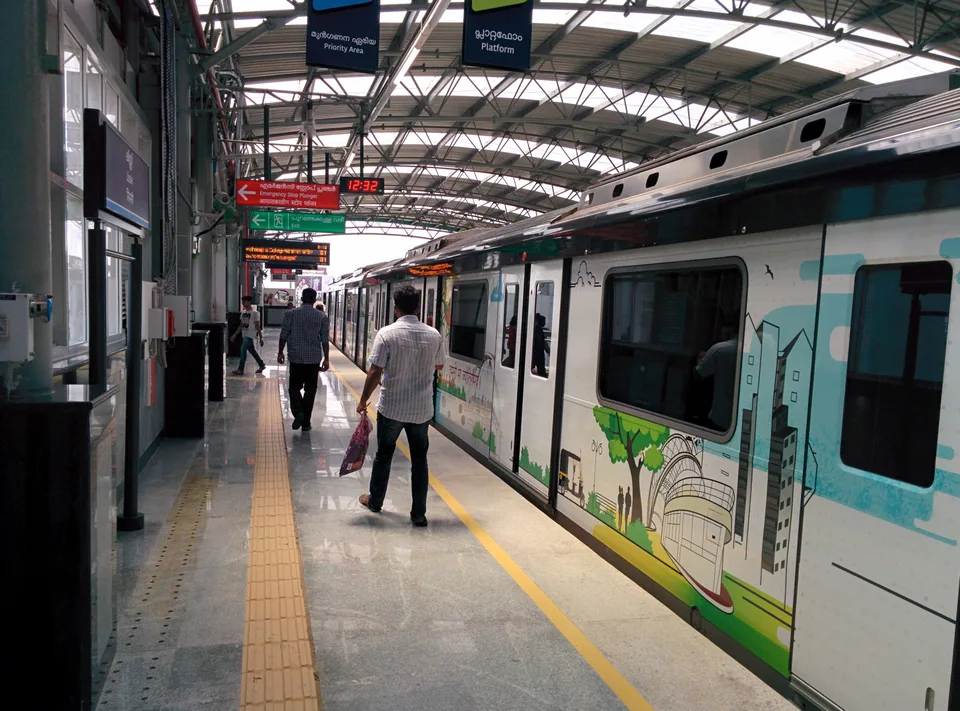
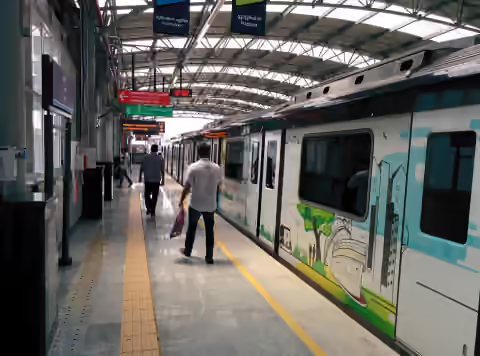
Metro train beside a station platform
A Kochi Metro train at Lissie station, October 2017.

Kochi Metro rail

A multi-government and Union–state urban-rail project.

Follow the milestones
  1. Union Cabinet approvalSecond Oommen Chandy ministry · KMRLPress Information Bureau, Government of India ↗
  2. Foundation stoneSecond Oommen Chandy ministry · KMRLPress Information Bureau, Government of India ↗
  3. Initial line inauguratedFirst Pinarayi Vijayan ministry · KMRLPress Information Bureau, Prime Minister’s Office ↗
  4. Phase-I extension opened; Phase-II foundationSecond Pinarayi Vijayan ministry · KMRLPress Information Bureau, Government of India ↗
An MSC container ship and a small tug seen through coconut palms near Vizhinjam.
An MSC container ship arriving at Vizhinjam, 5 October 2024.

Vizhinjam International Seaport

A PPP seaport with a 2015 agreement,2024 trials/commercial date and 2025 dedication.

Follow the milestones
  1. Concession agreement signedSecond Oommen Chandy ministry · VISL / Government of KeralaKerala State Planning Board ↗
  2. Construction groundbreakingSecond Oommen Chandy ministry · VISL / AVPPLKerala State Planning Board ↗
  3. Trial-run stageSecond Pinarayi Vijayan ministry · AVPPL / VISLKerala State Planning Board ↗ · Ministry of Ports, Shipping and Waterways, Government of India ↗
  4. Commercial operation dateSecond Pinarayi Vijayan ministry · AVPPL / VISLKerala State Planning Board ↗ · Kerala Legislature ↗
  5. Formal inaugurationSecond Pinarayi Vijayan ministry · VISL / AVPPLVizhinjam port project institutional website ↗ · Kerala Legislature ↗
  6. Direct EXIM operations commencedV. D. Satheesan ministry · VISL / AVPPLVizhinjam International Seaport Limited ↗
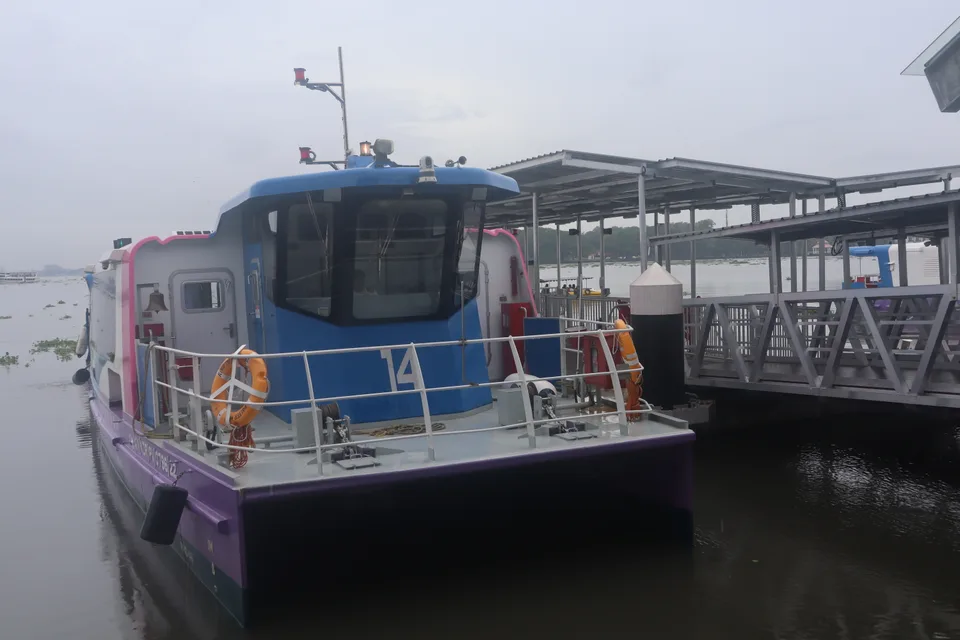
An electric Kochi Water Metro boat at the High Court terminal.
Kochi Water Metro boat at the High Court terminal, 2023.

Kochi Water Metro

Electric ferry-based urban transport, planned and implemented by public agencies with external finance.

Follow the milestones
  1. Dedication ceremonySecond Pinarayi Vijayan ministry · Kochi Water Metro LimitedKochi Water Metro Limited ↗
  2. High Court–Vypin revenue serviceSecond Pinarayi Vijayan ministry · KWMLKochi Water Metro Limited ↗
  3. Vyttila–Kakkanad serviceSecond Pinarayi Vijayan ministry · KWMLKochi Water Metro Limited ↗
An aerial view of Technopark buildings among trees in Thiruvananthapuram.
Technopark Phase I in Thiruvananthapuram, photographed from above on 13 October 2007. This historical view illustrates Kerala’s technology landscape; it does not show a KFON installation or a named startup programme.

Technopark

A multi-government institution with separate establishment, construction and dedication milestones.

Follow the milestones
  1. Establishment government orderSecond E. K. Nayanar ministry · Electronics Technology Parks–KeralaElectronics Technology Parks–Kerala (Technopark) ↗
  2. Foundation stone laidSecond E. K. Nayanar ministry · TechnoparkTechnopark ↗
  3. Dedication to nationSecond A. K. Antony ministry · TechnoparkTechnopark ↗
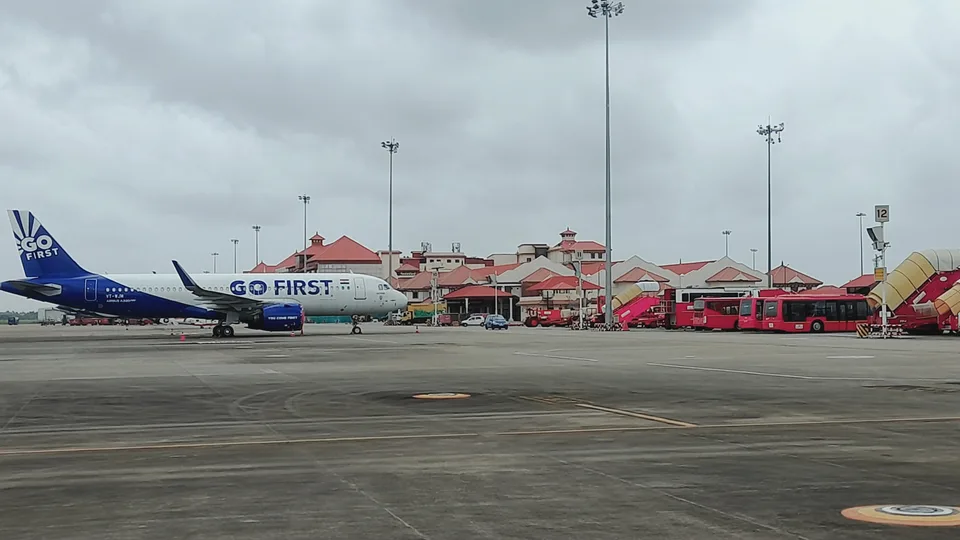
Aircraft and airport buses on the apron in front of Cochin International Airport Terminal 1
Aircraft, airport buses and Terminal 1 at Cochin International Airport, July 2023. Travel-infrastructure context.

Cochin International Airport

A public–private airport institution developed across the Karunakaran, Antony and Nayanar administrations.

Follow the milestones
  1. CIAL company incorporatedFourth K. Karunakaran ministry · CIALAirports Economic Regulatory Authority of India ↗ · Cochin International Airport Limited website; case study authored by Dr. Mohan B. and Dr. Filomina P. George ↗
  2. Airport inauguratedThird E. K. Nayanar ministry · CIALCochin International Airport Limited ↗ · Airports Economic Regulatory Authority of India ↗
  3. Air services began according to AERA submissionThird E. K. Nayanar ministry · CIALAirports Economic Regulatory Authority of India ↗

LIFE Mission housing

A coordinated housing mission that consolidates state departments, local governments and PMAY-linked housing.

Follow the milestones
  1. Mission implementation period beginsFirst Pinarayi Vijayan ministry · LIFE Mission / Local Self Government DepartmentLIFE Mission, Government of Kerala ↗ · Kerala State Planning Board ↗
  2. Five-lakh milestone reportedSecond Pinarayi Vijayan ministry · LIFE Mission / LSGDKerala State Planning Board ↗ · Onmanorama ↗ · Kerala Legislature ↗

Kerala Fibre Optic Network

State fibre infrastructure, government-office connectivity, commercial service and subsidised households have different scopes.

Follow the milestones
  1. Project dedicatedSecond Pinarayi Vijayan ministry · KFON / KSITIL / KSEBInformation and Public Relations Department, Government of Kerala ↗
  2. Free-connection target sanctionSecond Pinarayi Vijayan ministry · Electronics and IT DepartmentElectronics and Information Technology Department, Government of Kerala ↗
  3. Published connection-status cut-offSecond Pinarayi Vijayan ministry · KFONKerala State Planning Board ↗
Explore all project histories →
More project accounts from the reports

Development Through the Years

Institutions and initiatives across administrations. Select a chapter to see its documented government and institutional roles.

KELTRON

Corporation formed

Second C. Achutha Menon ministry

Technopark

Establishment government order

Second E. K. Nayanar ministry

Kudumbashree

Mission inaugurated

Third E. K. Nayanar ministry

ONE PLACE. TWO MOMENTS.

Kerala Then & Now

Discover documented changes through matched photographs. Each published pair needs established rights, dates and the same identifiable subject.

Explore the collection →

Historical comparisons will appear here when approved photograph pairs are published.

Compare Government Periods

Explore milestones from two administrations, with dates and links to their sources.

Oommen Chandy ministry · 2011

18 May 2011 — 20 May 2016

The periods differ in duration. Linked milestones show specific actions, not a complete measure of performance.

Comparable ministry totals are unavailable in the linked records; no numerical ranking is shown.

Explore ministry →

Pinarayi Vijayan ministry · 2021

20 May 2021 — 4 May 2026

The periods differ in duration. Linked milestones show specific actions, not a complete measure of performance.

Comparable ministry totals are unavailable in the linked records; no numerical ranking is shown.

Explore ministry →
Read a consistent statistical series

Annual values are observations, not a score for any government. Budget estimates, revised estimates and annual outcomes remain labelled in the source.

Growth through disruption →

Every Ministry. Its Own Chapter.

Read the period, council of ministers and available development history using the same editorial structure.

Government Report Cards

Major Milestones

  1. University of Kerala reconstitution

    Kerala University Act 14 of 1957

    Read the history →
  2. Kerala State Industrial Development Corporation

    Institution formed

    Read the history →
  3. Land reform legislation and implementation

    Specified 1963 Act provisions effective

    Read the history →
  4. KSRTC corporation conversion

    Establishment notification

    Read the history →
  5. University of Calicut

    Ordinance/statutory commencement

    Read the history →
  6. KELTRON

    Corporation formed

    Read the history →
  7. Technopark

    Establishment government order

    Read the history →
  8. Kudumbashree

    Mission inaugurated

    Read the history →
  9. Kochi Metro rail

    Union Cabinet approval

    Read the history →
  10. Kochi Water Metro

    Dedication ceremony

    Read the history →

Leaders Who Shaped Kerala

Chief Ministers, ministers and documented public contributions. A role in office does not by itself establish authorship.

Explore all public profiles →

What Comes Next?

Proposals, work in progress and future targets retain the status and reporting date in their original account.

Read the challenges and perspectives →

KAI — Understand Kerala’s Development

Ask about published histories, ministry records and project milestones. Answers keep their Kerala World source links.

Which governments contributed to Kochi Metro? ↗What were the major developments between 2016 and 2026? ↗How has Kerala’s healthcare system developed? ↗
Photographs, sources & editorial context

Licensed authentic photographs are not labelled as Kerala World originals. Responsive crops retain the original licence. Unknown capture dates are left unknown.

Students at the Little Kites Kollam district ICT camp, February 2020. — Fotokannan · CC BY-SA 4.0

An MSC container ship arriving at Vizhinjam, 5 October 2024. — Hobbywriterae · CC0 1.0

A building at Government Medical College, Kollam, May 2021. — Arunvrparavur · CC BY-SA 4.0

Kochi Water Metro boat at the High Court terminal, 2023. — Gnoeee · CC BY-SA 4.0

National Institute of Speech and Hearing (NISH), photographed in March 2015. — AswiniKP · CC BY-SA 4.0

Nazareth Retirement Home, Ashtamichira, photographed in August 2012. A community-care setting. — Shijan Kaakkara · CC BY-SA 4.0

Nirappam Kunnu Anganwadi Centre in Cheruvannur Grama Panchayat, Kozhikode, February 2008. — Jaisuvyas · CC BY-SA 4.0

Kerala Legislative Assembly, Thiruvananthapuram, January2025. The institution where state budgets are considered. — Shyamal · CC0 1.0

Government Victoria College campus, Palakkad, January2019. — Ranjithsiji · CC BY-SA 4.0

A display of household objects at En Ooru tribal heritage village, Pookode, Wayanad, November 2024. — Athulvis · CC BY-SA 4.0

Kerala ration-shop identification on closed wooden doors, October2019. — Ajamalne · CC BY-SA 4.0

Tea-leaf picking in Kerala, July 2013. An image of work, rather than a named government programme. — Sivahari · CC BY-SA 3.0

Rice growing at Eravathour in Thrissur, photographed on 26 March 2020. A view of Kerala agriculture, rather than a documented beneficiary of a named scheme. — Augustus Binu · CC BY-SA 3.0

Technopark Phase I in Thiruvananthapuram, photographed from above on 13 October 2007. This historical view illustrates Kerala’s technology landscape; it does not show a KFON installation or a named startup programme. — Ajaypp · CC BY 3.0

A cow photographed in Thrissur, Kerala. Context for animal husbandry; no particular dairy scheme or beneficiary is identified. — Ramesh NG · CC BY-SA 2.0

Malampuzha Dam in Palakkad, photographed on 13 September 2019. Reservoir infrastructure is shown as context for water management, not as a project newly completed during 2016–2026. — Jatheesh Nharekkattu · CC BY-SA 4.0

Koovery Co-operative Bank, photographed on 31 March 2012. A local cooperative-banking setting, rather than evidence of a particular government funding programme. — Vaikoovery · CC BY 3.0

Tea plantations at Munnar, photographed from State Highway 18 looking west on 15 May 2011. The landscape provides agricultural and tourism context. — Jeevan Jose, Kerala, India · CC BY-SA 4.0

Fishing boats on the Kerala coast, photographed on 12 October 2019. The photographer identifies Kerala but does not name a government programme. — Josephgeorge23 · CC BY-SA 4.0

IISER Thiruvananthapuram’s campus, photographed on 28 July 2021. An institutional research setting illustrating Kerala’s science landscape. — IISER TVM · CC BY-SA 4.0

KINFRA International Exhibition Centre at Kakkanad, Kochi, photographed on 21 November 2025. An exhibition venue in Kerala’s industrial ecosystem; this image does not establish KIIFB funding or show an industrial factory. — Varghesepunnamada · CC BY-SA 4.0

Vazhakkulam Block Panchayat office near Aluva, photographed on 10 July 2020. Local-government context for the housing programme. — Ranjithsiji · CC BY-SA 4.0

A Kochi Metro train at Lissie station, October 2017. — NidhinWiki · CC BY-SA 4.0

Solar panels at Cochin International Airport, March 2017. — Pradeep Mohandas · CC BY-SA 4.0

Mangroves and boats at Ponnani, February 2021. — Vicharam · CC BY-SA 4.0

Greenfield International Stadium before a cricket match, November 2017. — Arunsunilkollam · CC BY-SA 4.0

Kerala during the August 2018 floods. The photograph provides disaster context for rebuilding. — Vishnus00 · CC BY-SA 3.0

Haritha Karma Sena workers, identified by the photographer, December 2019. — Shagil Kannur · CC BY-SA 4.0

Kerala Government Secretariat, June 2011. Administrative context for governance and land-record services. — Ajeeshcphilip · CC BY-SA 3.0

NH66 through Chathannoor town, October 2018. — Arunvrparavur · CC BY-SA 4.0

Napier Museum at dusk, October 2012. — VISHNU C. RAJAN · CC BY-SA 4.0

State Highway 59, the Hill Highway, at Elappara, April 2023. — Arunvrparavur · CC BY-SA 4.0

Aircraft, airport buses and Terminal 1 at Cochin International Airport, July 2023. Travel-infrastructure context. — Josekuttypanackal · CC BY 3.0

The Paravur–Varkala coastal road at Thekkumbhagam, November 2014. A historical view of the coastal corridor. — Arunvrparavur · CC BY-SA 3.0

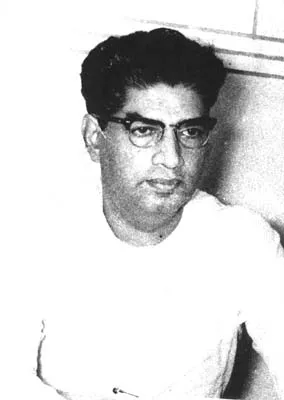
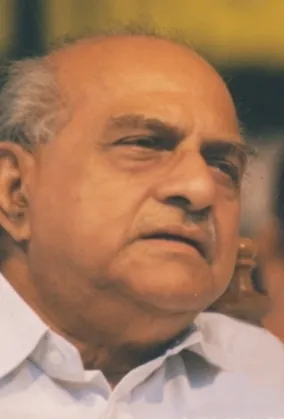
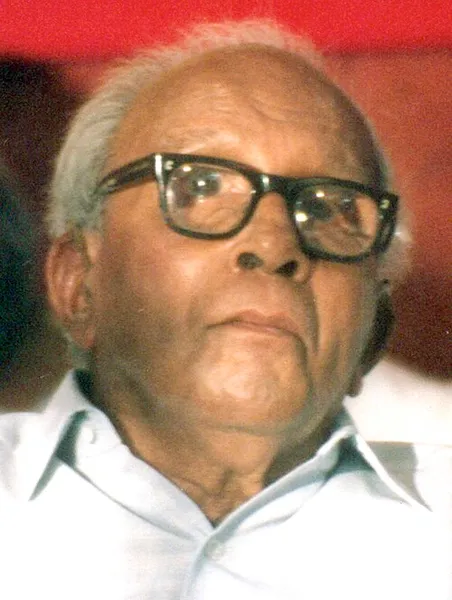
E. M. S. Namboodiripad — Fotokannan at Malayalam Wikipedia. · CC BY-SA 3.0 · Capture date: not established

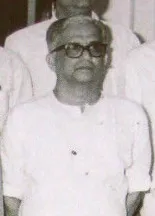
R. Sankar, Indian politician — Government of Kerala (India) · GODL-India · Capture date: not established

C. Achutha Menon in 1969 — http://www.niyamasabha.org/ · CC BY-SA 2.5 · Capture date: 1969-11-01

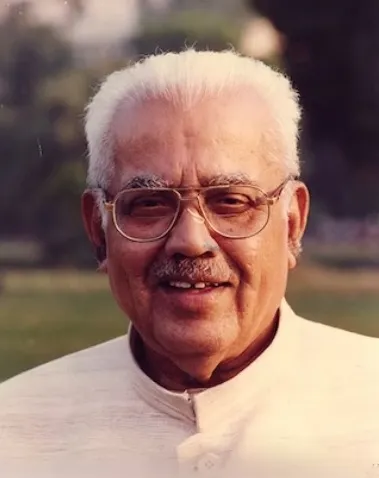
K. Karunakaran (image) — Government of Kerala (India) · GODL-India · Capture date: not established

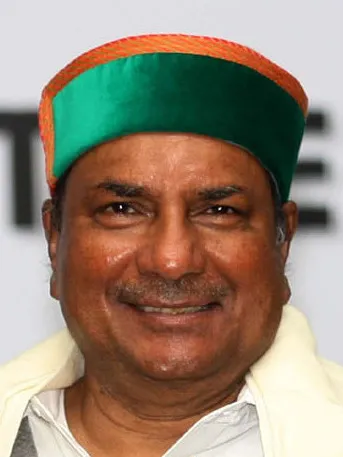
A. K. Antony — Ministry of Defence · GODL-India · Capture date: 2013-02-19 11:36:10

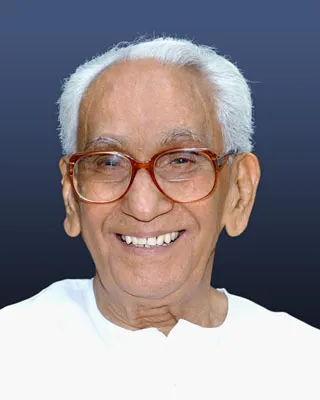
P.K. Vasudevan Nair — E. Balanandan Foundation, Cropped and retouched by Kiran Gopi · CC BY-SA 3.0 · Capture date: not established

C H Mohammed Koya (1979) — http://www.niyamasabha.org/ · CC BY-SA 2.5 · Capture date: 1979-10-12

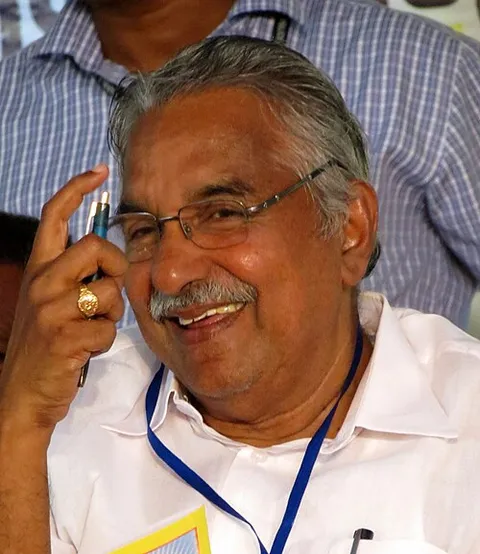
Oommen Chandy 2013 1 — User:Sivavkm · CC BY-SA 3.0 · Capture date: 2013-01-29 16:46:20

Pattom A. Thanu Pillai — Telengana Raj Bhavan, Government of India · GODL-India · Capture date: not established

Pinarayi Vijayan — ബോധി കോമൺസ് · CC BY-SA 3.0 · Capture date: 2011-01-01

E. K. Nayanar — Horreb · CC BY-SA 4.0 · Capture date: not established

V. S. Achuthanandan — No machine-readable author provided. Soman assumed (based on copyright claims). · CC BY 2.5 · Capture date: not established

V. D. Satheesan — Fotokannan · CC BY-SA 3.0 · Capture date: 2011-05-31

Kerala Legislature ↗ · Secretariat of the Kerala Legislature ↗ · India Code, Government of India ↗

Suggest a correction →

DISCOVER KERALA

Search Kerala World